
Holiday shifts are a fact of life for a lot of workers. Whether you’re stocking shelves, staffing a warehouse, or working a hospital floor, someone has to be on the clock when everyone else is off. So it’s a fair question: if you work on a holiday, do you get paid more?
The short answer is sometimes. It depends on your employer and, in some cases, your state.
What federal law says
Federal law doesn’t require extra pay for holiday work. The Fair Labor Standards Act sets minimum wage and overtime rules, but it doesn’t require employers to pay a premium rate for working on a holiday. Under federal law, a holiday shift is treated like any other workday, and you’re paid your regular rate for the hours you work.
Where the answer can change
Your employer’s policy is the biggest factor. Many companies add a holiday premium, often time-and-a-half, or offer comp time or a paid day off to make holiday shifts easier to fill. If your company does this, the policy is usually in your employee handbook, offer letter, or holiday schedule.
Your state can also matter. Most states follow the federal rule, but a few have their own requirements. For example, some states require premium pay for certain holiday work in some sectors.
Overtime is the last piece. If a holiday shift pushes your week past 40 hours, overtime rules apply. Hours you actually work on a holiday count toward that total, so some of your extra pay may come from overtime rather than a holiday premium. Holidays you don’t work generally don’t count toward the 40 hours unless your policy says otherwise.
How to find your answer
Start with your offer letter, your handbook, and any holiday schedule your manager has shared. If you still aren’t sure, start by asking your manager. If they don’t know, they should be able to point you in the right direction. Be specific. Ask whether holiday hours get a premium, whether that premium is paid or taken as time off, and how holiday hours count toward overtime in your workweek.
Where On-Demand Pay fits
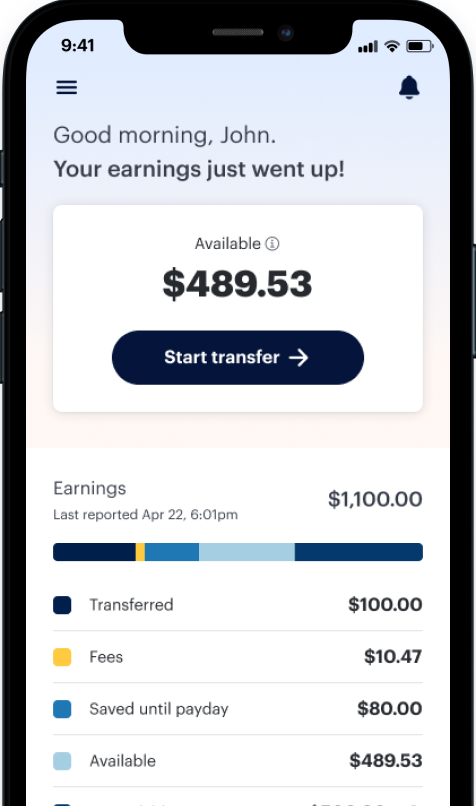
A holiday premium changes how much you earn. On-demand pay changes when you can reach the money you’ve already earned. That difference matters most when you work a holiday shift but your next paycheck is still days away. If your employer offers On-Demand Pay, you can access your earned wages before payday, on your terms. (Fee may apply).
Frequently asked questions
-
What’s the difference between holiday pay and a holiday premium?
A holiday premium is extra pay for hours you work on a holiday, usually a higher rate. Holiday pay can also mean paid time off for a holiday you don’t work, so the term can mean different things at different employers. Check your handbook to see which one applies to you.
Because the terms overlap, you should ask HR two questions: Do I get paid time off on holidays? Do I get paid a premium rate if I work on a holiday?
-
What should I look for on my pay stub after a holiday shift?
Look for separate lines for holiday hours, a premium rate, or overtime, if your employer uses them. Pay stub labels vary, so compare the hours and rates listed with your schedule to confirm you were paid as expected. If something looks off, ask payroll about it before your next pay date.
-
Should I ask about holiday pay before accepting a job?
Yes. Ask about holiday premiums, comp time, and holiday scheduling before you accept an offer, since those terms are often set in your offer letter or handbook and are easier to clarify early.
-
Does federal law require holiday pay?
No. The Fair Labor Standards Act sets minimum wage and overtime rules but doesn’t require employers to pay a premium for holiday work. Under federal law, a holiday shift is treated like any other workday, and you can be paid your regular rate for the hours you work.
-
Do holiday hours count toward overtime?
Yes, hours you actually work on a holiday count toward your 40-hour weekly total, so overtime rules can apply. Holidays you don’t work generally don’t count unless your policy says otherwise. That means some of your holiday premium pay may be paid at the overtime rate rather than the holiday premium rate.
All information herein is for educational purposes only and should not be relied upon for any other use. The information herein does not constitute the rendering of financial, business, accounting, securities, tax or legal advice, or other professional advice by DailyPay. No fiduciary obligation or duty exists or is created, between you and DailyPay. DailyPay does not warrant the completeness or accuracy of any information provided to you.
:DailyPay, 2020